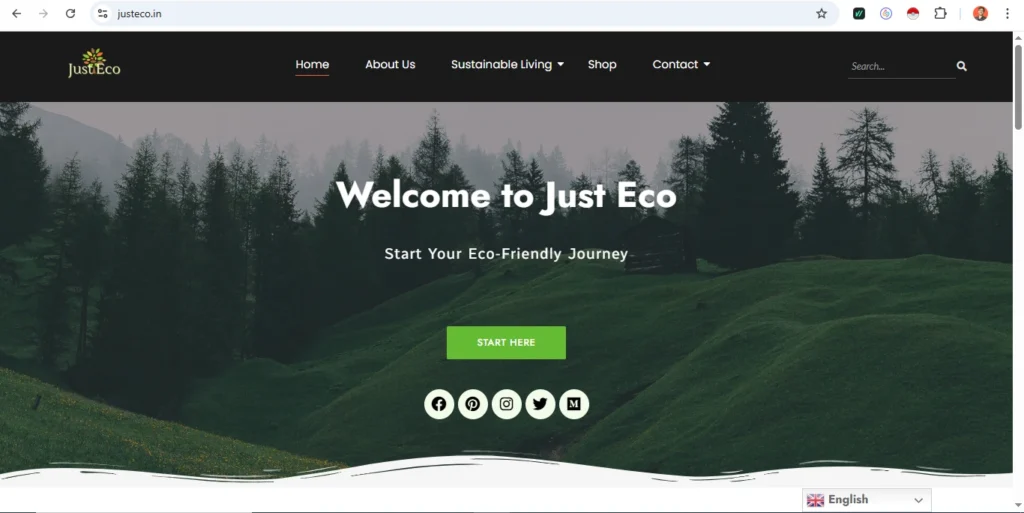
Hey there, I’m Abhay, founder of Justeco.in 👋 — a sustainability blog I started four years ago with nothing but passion, curiosity, and a belief that small digital actions can make a big difference for our planet.
When I first began, I had no clue about domains, hosting, SEO, or how to make money through blogging. I just wanted to share tips on eco-friendly living — but over time, I learned that you can build a blog that both helps the planet and supports you financially.
In this detailed guide, I’ll walk you through exactly how to start an eco-friendly blog, step-by-step — from picking your niche to setting up hosting, writing your first post, growing traffic, and monetizing ethically.
So, grab your notebook and some green tea — let’s build your sustainable online home.
Why Start an Eco-Friendly Blog?
If you’ve ever thought, “I care about the environment, but how can I make an impact from home?”, blogging is one of the best answers.
Here’s why:
- You amplify awareness. Every blog post you write about zero waste, green products, or sustainability inspires others to take small steps.
- You build authority in a growing niche. The eco-friendly market is booming — from green tech to ethical fashion, there’s massive demand for authentic voices.
- You can earn ethically. By promoting eco brands, digital tools, and green services, you can create a steady income stream — without selling your soul to clickbait.
I started Justeco.in in 2020 with just ₹1,000 for hosting, and it slowly turned into a platform that brings me affiliate income, brand collaborations, and meaningful conversations.
Step 1: Choose Your Eco-Friendly Niche (and Define Your “Why”)
Before buying hosting or writing your first post, ask yourself: “What specific area of sustainability do I care about most?”
The eco niche is huge — here are some great micro-niche ideas:
- Zero Waste Lifestyle
- Eco-Friendly Product Reviews
- Sustainable Fashion
- Green Home & DIY
- Renewable Energy & Tech
- Eco-Travel
- Ethical Beauty or Skincare
- Sustainable Business
Pick a niche that overlaps your passion + audience interest + monetization potential.
Example: I personally loved talking about eco-living products — it made it easy for me to review sustainable alternatives (and earn through affiliate links) while genuinely helping people live greener lives.
✅ Your goal: Define one clear niche and one clear audience before moving to setup.
Step 2: Pick a Green Web Hosting (and Why I Recommend Hostinger)
Once you know your niche, it’s time to bring your blog online.
Your hosting provider is like your blog’s home — it decides how fast your site loads, how secure it is, and how smoothly your visitors experience your content.
When I was starting out, I wasted weeks comparing hosting companies. Some were too expensive, others too complicated. Finally, I discovered Hostinger — and it turned out to be one of the best decisions for my eco blog.
Why I Recommend Hostinger
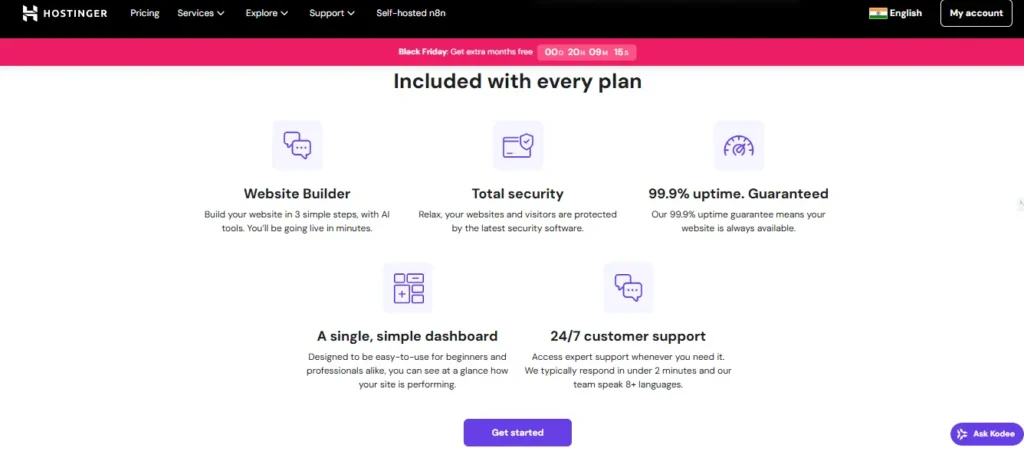
- Affordable for beginners — plans start as low as ₹69/month during discounts.
- Fast and reliable — LiteSpeed servers make your blog super quick.
- Free SSL & domain — perfect for new bloggers who don’t want extra costs.
- Energy-efficient data centers — Hostinger’s infrastructure is designed to reduce power consumption.
Step-by-Step Setup: How to Get Your Blog Online with Hostinger
Let’s go step-by-step through the actual setup process, because I know how confusing this part can feel when you’re just starting. I remember spending hours searching for tutorials, but trust me — once you follow these steps, you’ll have your blog live in less than 30 minutes.
1. Go to Hostinger
Visit Hostinger’s official website and head over to their hosting plans. Hostinger is beginner-friendly, so you won’t get lost in complicated options or technical terms. You’ll find everything laid out clearly — pricing, features, and what’s included in each plan.
2. Choose the Single Web Hosting or WordPress Starter Plan
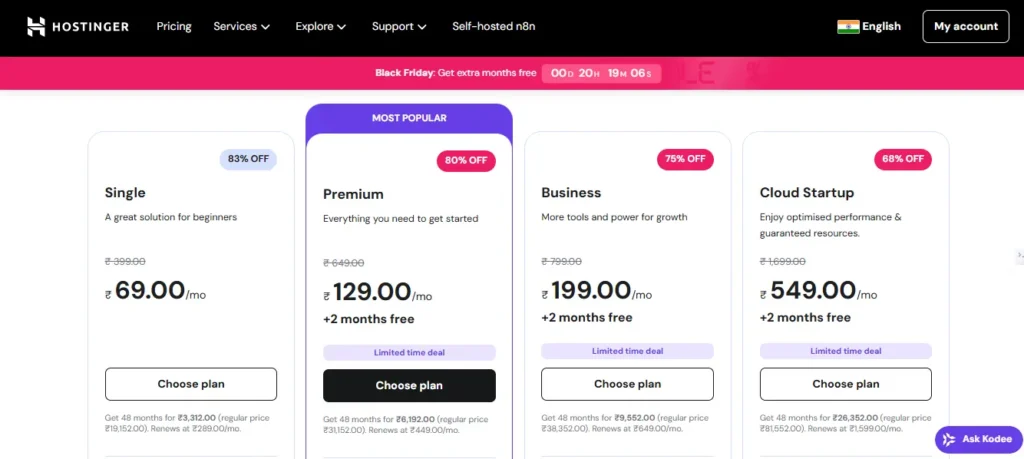
If you’re just getting started, the Single Web Hosting Plan is perfect — it’s affordable, reliable, and includes everything you need to launch your first blog.
But if you want to grow faster, the WordPress Starter Plan gives you a few extras like more storage and support for multiple websites.
When you’re choosing a plan, think about your long-term vision. If your goal is to turn your blog into a full-fledged business (which I highly recommend), go for the Starter Plan — it’s worth the small extra cost.
3. Select Your Domain
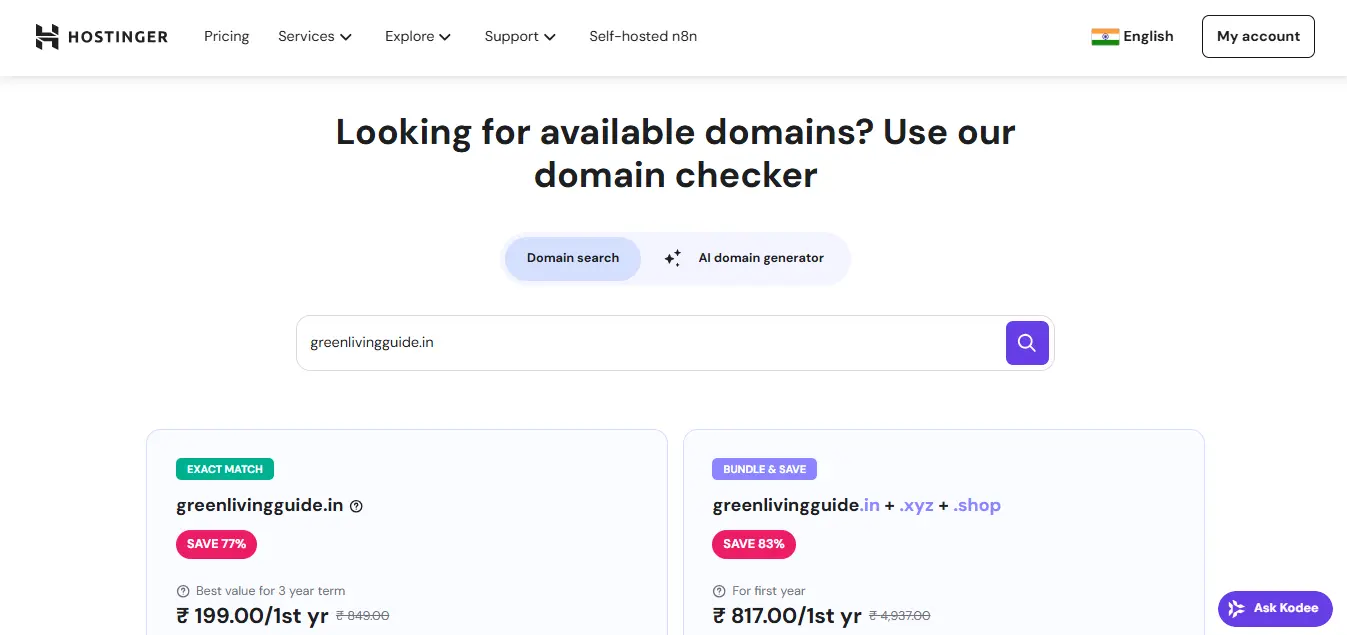
Next, you’ll be asked to choose a domain name — this is your blog’s identity on the internet.
Your domain should be short, memorable, and relevant to your niche. For example, if your blog is about green living, you might choose something like GreenLivingGuide.in or EcoWithAbhay.com.
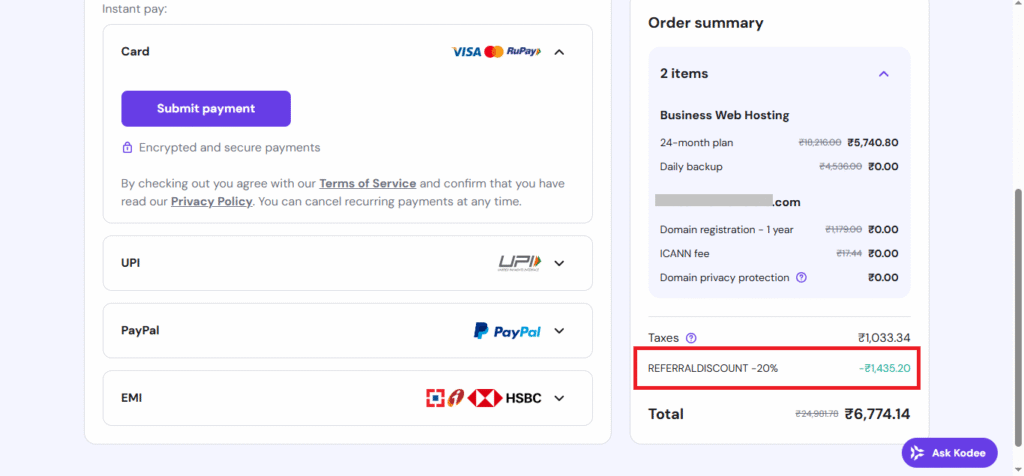
Hostinger often includes a free domain name with their Premium hosting plan (Use REFERRAL CODE “PXPABHAYGTLJ” to get 20% Instant Discount), so you don’t need to buy it separately — another reason I love them for beginners.
A quick tip here: avoid complicated names or hyphens. You want your readers to remember your domain easily and type it without errors. Example: GreenMadeSimple.com, EcoWithMe.in, or Justeco.in.
4. Install WordPress in One Click
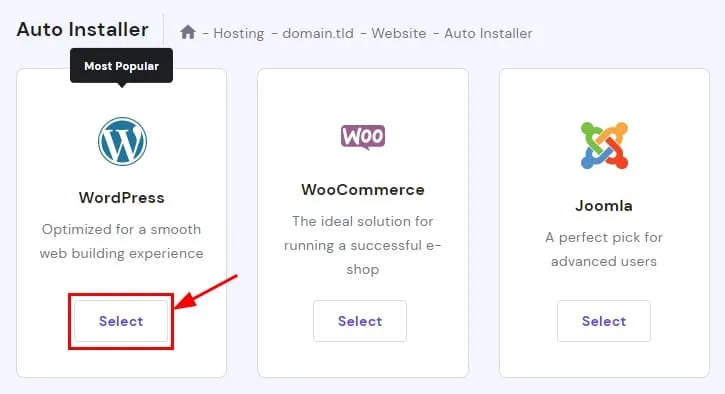
Once your hosting and domain are set, Hostinger will give you an option to install WordPress automatically.
Just click on the “Set Up” button, select WordPress as your platform, and fill in a few basic details (like your site name and login credentials).
In the background, Hostinger does all the technical setup for you — no coding, no manual uploads, no confusing control panels. Within a minute or two, your WordPress dashboard will be ready to use.
If you’ve never used WordPress before, don’t worry. Think of it as your blog’s control center — this is where you’ll write posts, upload images, and customize your site design.
5. Your Blog Is Live
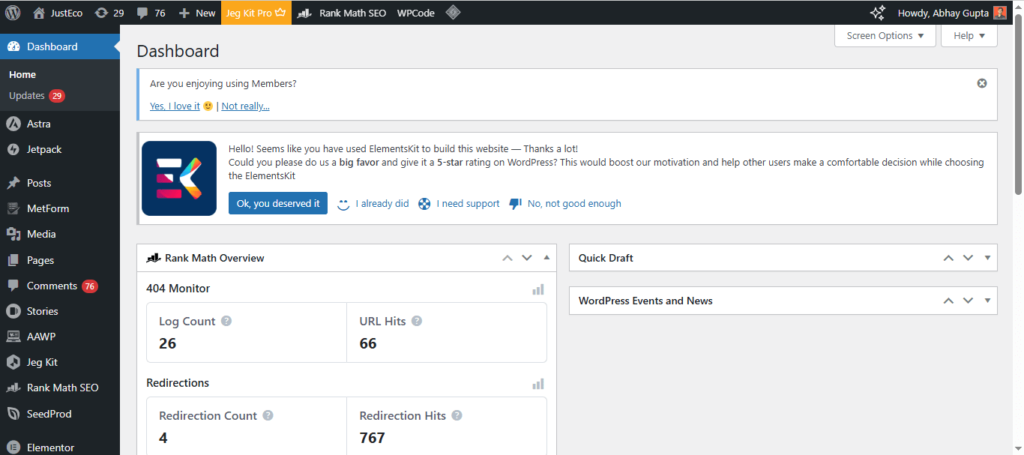
That’s it! Once WordPress finishes installing, you can log in and see your brand-new eco-friendly blog live on the internet.
Take a moment to enjoy this — you’ve just created your digital space for change.
You now officially own a corner of the internet where you can inspire others to live sustainably, share eco-friendly tips, and even build a business that aligns with your values.
From here, you can start customizing your design, writing your first post, and exploring the plugins that will make your blog faster and more beautiful.
Step 3: Design Your Blog (Keep It Simple, Fast, and Sustainable)
Now that your eco-friendly blog is live, it’s time to make it look beautiful — but not at the cost of performance or sustainability.
I’ve seen so many new bloggers fall into this trap: they install flashy themes, heavy page builders, and dozens of unnecessary plugins that make their sites painfully slow.
When I first started Justeco.in, I made the same mistake. I spent weeks tweaking layouts, adding animations, and trying every design plugin I could find — and as a result, my website took forever to load. Later, I realized that simplicity isn’t just better for SEO and user experience — it’s also better for the planet.
A fast, lightweight website consumes less server power, uses fewer data resources, and provides a better experience for your readers. That’s what sustainable web design is all about.
Let’s walk through how you can design your eco-friendly blog in a clean, energy-efficient, and beginner-friendly way.
1. Choose a Clean, Lightweight WordPress Theme
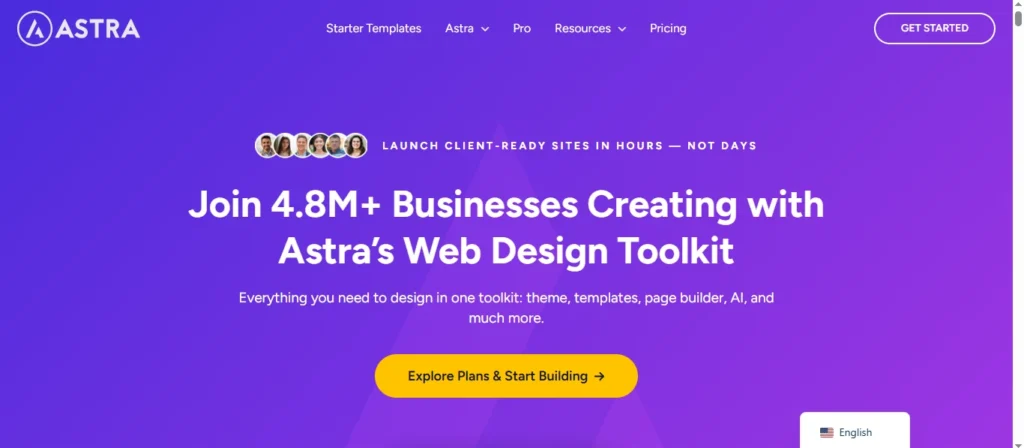
The theme you choose will define your blog’s structure, look, and speed.
When I redesigned Justeco.in, I tested several free and premium themes — and here’s what I learned: most beginners don’t need a fancy paid theme right away. What you need is a simple, fast, and flexible theme that’s easy to customize.
Here are a few great options I recommend:
- Astra: Lightweight, customizable, and works beautifully with page builders.
- GeneratePress: Extremely fast and minimal, great for bloggers focused on performance.
- Kadence: A modern theme that gives you design flexibility without slowing down your site.
- Blocksy: A newer theme that’s optimized for Gutenberg, with eco-friendly efficiency in mind.
All of these themes are responsive (mobile-friendly), SEO-optimized, and built for speed.
Once you install your theme, spend some time customizing the basic settings:
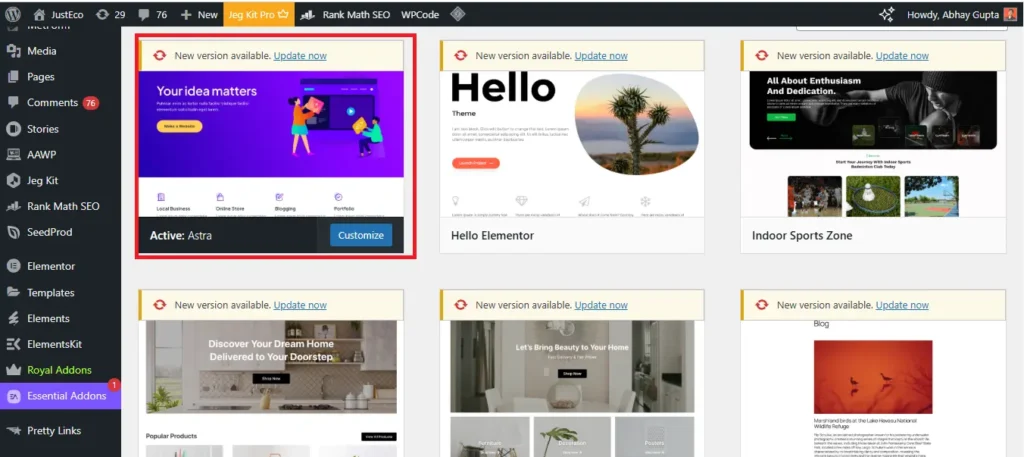
- Upload your logo (you can design one for free using Canva).
- Choose your brand colors — earthy tones like green, beige, and brown work great for eco blogs.
- Select readable fonts — something clean like “Poppins” or “Open Sans.”
- Keep whitespace — it makes your site easy to read and less visually overwhelming.
👉 Start your eco-friendly blog with Hostinger today →
2. Install Only the Essential Plugins
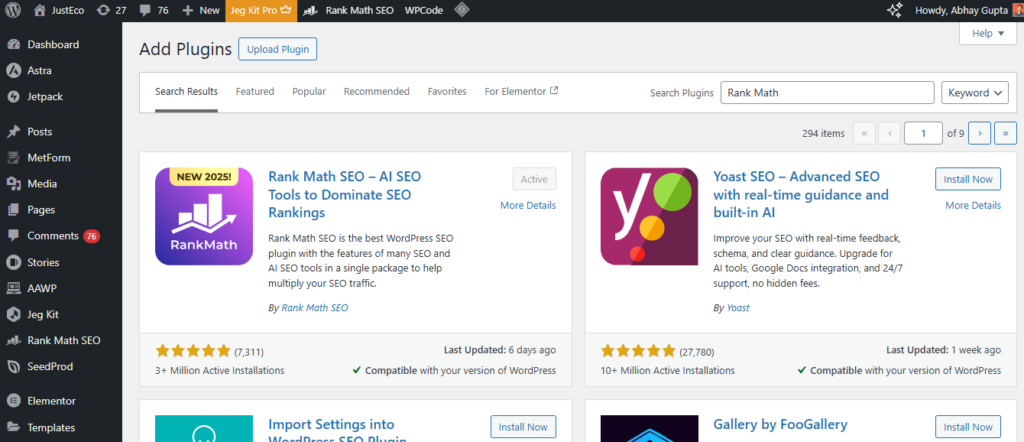
Plugins are like apps for your blog — they add extra features.
But here’s the thing: the more plugins you install, the slower and heavier your website becomes.
When I started, I made the mistake of installing over 25 plugins because every YouTube tutorial suggested one more. Eventually, I trimmed them down to the essentials, and my site’s speed improved instantly.
Here’s my essential plugin stack for beginners:
- Rank Math SEO: Helps you optimize every post for Google.
- LiteSpeed Cache (or WP Rocket): Speeds up your site and improves performance.
- UpdraftPlus: Automatically backups your site in case something goes wrong.
- ShortPixel or TinyPNG: Compresses images to make them load faster.
- Elementor (or Gutenberg): Lets you design pages easily without coding.
That’s all you need in the beginning.
As your blog grows, you can add more tools — but focus on keeping your site light and efficient.
3. Design a User-Friendly Homepage
Think of your homepage as your eco brand’s welcome mat. It’s often the first impression people get of you and your message.
Here’s a simple layout you can follow:
- Header: Your logo + main menu (Home, Blog, About, Contact).
- Hero Section: A short introduction about what your blog stands for — “Helping people live more sustainably.”
- Featured Posts Section: Highlight 3–4 of your best blog posts.
- About Section: A short paragraph introducing yourself (“I’m Abhay, and I started Justeco.in to make sustainability simple for everyone.”).
- Newsletter Signup: Offer a small freebie (like “10 Easy Eco Swaps”) to grow your email list.
- Footer: Links to About, Contact, Privacy Policy, and your social media pages.
If you’re using Elementor, you can drag and drop these sections easily, or you can use your theme’s built-in homepage templates.
Don’t overload your homepage with heavy images or videos — use compressed images and focus on clarity and storytelling.
4. Make Navigation Simple
A sustainable website is not just about green energy — it’s also about user experience.
Visitors should be able to find what they need in one or two clicks.
Here’s what your main menu should include (keep it short):
- Home
- Blog (or Categories dropdown)
- About
- Contact
- Resources (optional but great for affiliate links)
Your goal is to make the experience feel clean, calm, and purposeful — like your message.
Speed is crucial — not just for Google rankings but also for reducing your blog’s energy footprint.
Every time someone loads your page, the server consumes electricity. The faster your site loads, the fewer resources it uses.
Here are simple ways to optimize:
- Compress all images before uploading (use TinyPNG or ShortPixel).
- Enable caching using LiteSpeed or WP Rocket.
- Use fewer plugins and avoid heavy animations.
- Keep your homepage under 2 MB in total size.
- Use a Content Delivery Network (CDN) like Cloudflare (Hostinger includes it).
When I optimized Justeco.in using these tips, my page load time dropped from 6 seconds to under 2 seconds — and my bounce rate improved instantly.
6. Design With Accessibility and Purpose
An eco-friendly blog should also be people-friendly.
That means using clear fonts, good color contrast, and descriptive alt text for every image (important for SEO and accessibility).
Every design choice should have a reason — if it doesn’t add clarity or value, remove it.
Sustainability in web design isn’t just about colors or hosting — it’s about creating a digital space that serves people efficiently and responsibly.
Step 4: Write Your First Blog Post (and Make It Helpful)
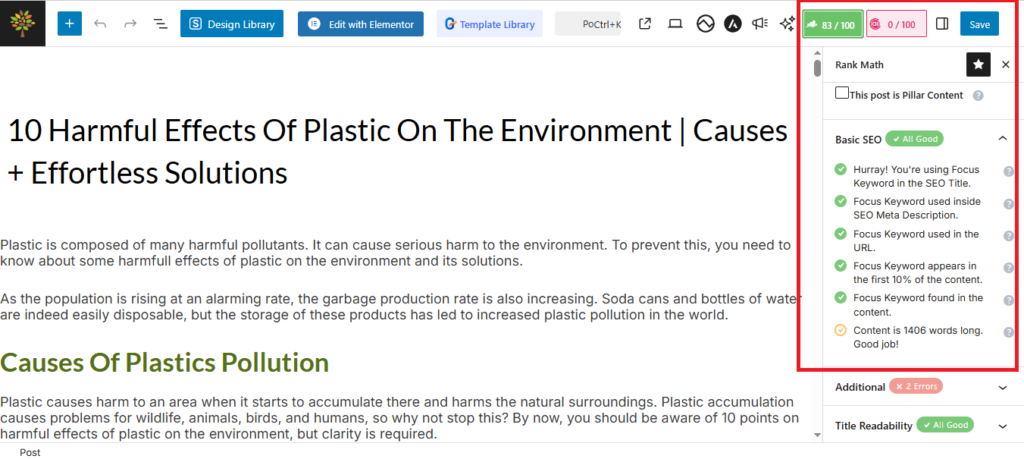
Now that your blog design is ready, it’s time to do the most important thing — start writing.
This is where your voice, your message, and your passion come alive.
When I wrote my very first post for Justeco.in, I must’ve rewritten it ten times. I wasn’t sure what to write, whether it was “SEO-friendly,” or if anyone would even read it. But what I’ve learned over the years is this:
Don’t aim for perfection — aim to help one real person with one real problem.
Your first post doesn’t need to go viral, rank on Google, or make money right away. It just needs to start conversations and show your readers that you care.
1. Pick a Simple, Actionable Topic
Start with a topic you already know something about or practice in your daily life.
Here are a few examples to get your ideas flowing:
- “10 Simple Swaps to Make Your Home More Eco-Friendly”
- “My Journey from Plastic Bags to Zero Waste Shopping”
- “Eco-Friendly Kitchen Essentials I Use Every Day”
- “How to Start a Sustainable Living Habit in 7 Days”
These are easy to write because they come from personal experience — and they connect instantly with readers who are just beginning their eco journey too.
If you’re unsure, think about what you’d tell a friend who asks,
“Hey, I want to live more sustainably — where do I start?”
That’s your first blog post idea.
2. Forget SEO (for Now) — Focus on Helping
One of the biggest mistakes beginners make (and I made this too) is getting stuck in the technical side — keywords, meta descriptions, backlinks, and so on — before even learning how to write a genuine, helpful post.
Here’s my honest advice:
In the beginning, you don’t need to focus on keyword research or SEO.
Your priority should be to learn how to:
- Write clearly
- Structure your posts properly
- Provide genuine value
- Build consistency
SEO is important, but it’s something you can gradually explore once you’ve written a few posts and feel comfortable creating content.
That’s exactly what I did. For my first three months, I didn’t even open Google Keyword Planner. I just wrote what I cared about — sustainable living, eco-products, and my personal journey. Later, when I understood what my readers liked, I slowly started learning SEO and optimization.
So, take the pressure off yourself.
Write like you’re explaining a topic to a curious friend, not like you’re writing an academic report.
3. Structure Your Post for Readability
Good writing isn’t just about words — it’s also about structure.
A clear format helps readers stay engaged and helps you organize your thoughts.
Here’s a simple structure I still use for every post:
- Introduction: Start with a story or relatable hook.
Example: “Last year, I realized how much plastic I was using daily — and it shocked me.” - Problem: Explain why the topic matters.
Example: “Most people don’t realize that small habits, like using plastic bottles, add up to huge waste.” - Solution: Offer practical, step-by-step advice.
Example: “Here are 10 eco-friendly swaps that helped me reduce my waste by 60%.” - Your Experience or Results: Share something personal or specific you learned.
Example: “I was surprised how much money I saved after switching to reusable products.” - Conclusion + Call-to-Action: End by encouraging readers to take small action.
Example: “Start with just one swap this week — and share your progress in the comments.”
This structure keeps your writing natural, easy to follow, and engaging — even if you’re not an expert writer yet.
4. Write Like You Speak
When I started, I used to write in a formal tone because I thought it sounded professional. But I realized readers connect more with real people, not robotic sentences.
So write like you’re having a friendly conversation:
- Use “I” and “you.”
- Keep sentences short.
- Don’t be afraid to share your thoughts, struggles, and humor.
Example:
Instead of writing: “Sustainability is the practice of meeting the needs of the present without compromising future generations.”
Try this: “Being sustainable just means thinking about tomorrow while living today — making choices that help both you and the planet.”
5. Use Visuals to Tell Stories
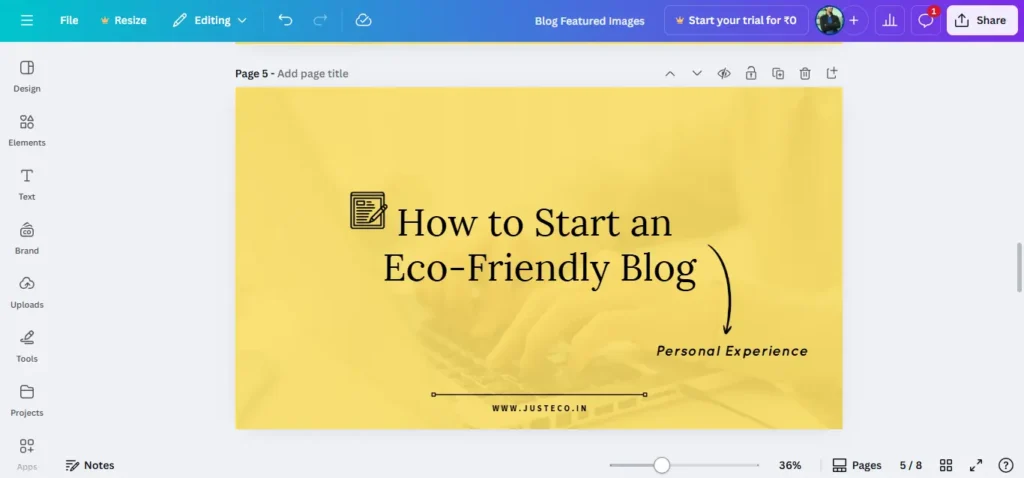
A good eco blog doesn’t just rely on text. Use photos, infographics, or small visuals that enhance your message.
- If you’re talking about eco-products, include photos of the ones you actually use.
- Use Canva to design clean visuals or comparison graphics (“Plastic vs Reusable”).
- Add screenshots or step-by-step images if you’re writing a tutorial.
Visuals break up the text, keep readers interested, and make your content easier to remember.
6. Add Value Before You Add Links
Once you start monetizing through affiliate links, it’s tempting to drop links in every paragraph. But readers can tell when you’re trying to sell instead of help.
So here’s my golden rule: Always provide value first — and only recommend products you’ve personally used or truly believe in.
Example:
Instead of writing, “Buy this eco-bottle, it’s great!”
write,
“I’ve been using this stainless steel bottle for 6 months — it keeps my water cool and has completely replaced my plastic bottles. Here’s the one I use.”
This builds trust and long-term readers — the kind who’ll keep coming back and actually convert.
7. Publish and Move On to the Next One
Here’s a secret: your first post won’t be perfect, and that’s fine.
Even my early posts make me cringe today — but I wouldn’t be here if I hadn’t published them.
So once your post feels complete:
- Re-read it once for typos or flow.
- Add 1-2 internal links to related topics (like “eco-friendly lifestyle” or “green hosting”).
- Publish it.
Don’t get stuck editing forever. Publish, learn, and move on to the next article.
Blogging is a skill you develop by doing — not by waiting for perfection.
8. What to Focus On Next
After you’ve written 3–5 posts, start gradually learning about:
- Keyword research – how to find what people are searching for.
- SEO basics – optimizing titles, meta descriptions, and headings.
- Content strategy – how to plan topics that attract long-term readers.
But remember, these are next steps, not your starting point.
Right now, your focus should be on building your writing habit, your voice, and your confidence.
When you publish your first post, take a screenshot — it’s a big milestone. You’ve officially become a creator, not just a consumer of content.
That first post, no matter how simple, is your foundation for everything that comes next — traffic, income, partnerships, and impact.
👉 Start your eco-friendly blog with Hostinger today →
Step 5: Promote Your Blog (Get Your First Readers)
You’ve written your first eco-friendly post — now what?
It’s time to get it in front of real people.
When I launched Justeco.in, I thought “If I just write great content, Google will find it.”
But nothing happened for weeks.
No visitors. No clicks. No comments.
That’s when I learned the golden rule of blogging: Writing is half the job — promoting is the other half.
The good news? You don’t need ads or expensive tools to get your first 1,000 readers. You just need a simple, consistent strategy to share your content in the right places.
Let’s walk through how you can do that effectively — even if you’re starting from scratch.
1. Share Your Story on Social Media
Before you worry about “algorithms” or fancy content calendars, start with something simple — share your story.
Tell people why you started your blog.
You can post something like this on your personal Instagram or LinkedIn:
“I’ve just started my eco-friendly blog, where I share practical tips for living sustainably and reducing waste. I’d love your feedback on my first post!”
This approach works because people love following genuine journeys. You’re not “promoting a product” — you’re inviting them to join your mission.
Over time, you can create dedicated pages for your blog:
- Instagram: Post photos, carousels, or reels of eco-tips. (Justeco Instagram Page)
- LinkedIn: Share insights about sustainable lifestyles and green businesses. (LinkedIn Page)
- Facebook Groups: Join eco-living or sustainability communities and share your blog when it adds value to ongoing discussions. (Justeco Facebook Page)
Don’t spam links. Instead, engage in conversations, comment on other posts, and share your link naturally when it’s relevant.
2. Use Pinterest (One of the Best Free Traffic Sources)
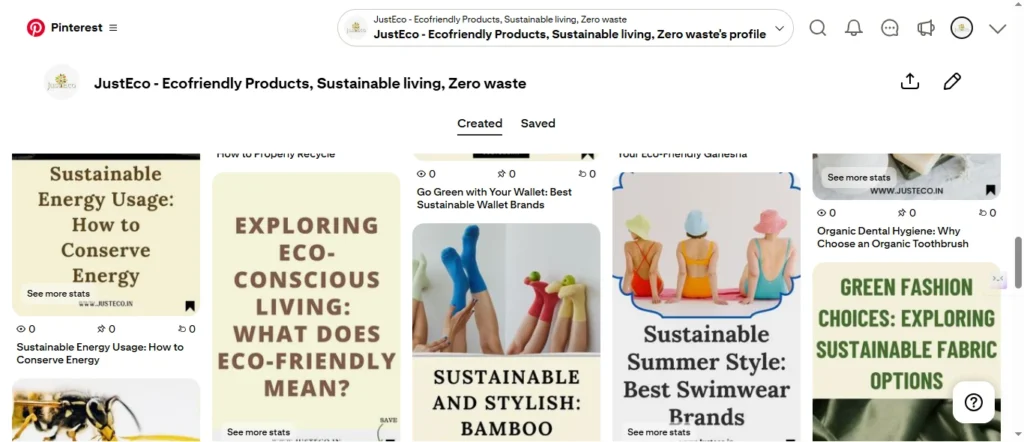
If you’re blogging in the eco or lifestyle niche, Pinterest is your best friend.
It’s not just a social network — it’s a visual search engine.
People go there to find ideas and inspiration like:
- “Eco-friendly home ideas”
- “Zero waste lifestyle tips”
- “Sustainable product swaps”
And every pin can link directly to your blog post.
Here’s how to get started:
- Create a free Pinterest Business Account. (Check Justeco Pinterest Page)
- Design eye-catching pins on Canva (use vertical templates like 1000×1500 px).
- Write keyword-rich pin titles and descriptions.
- Pin consistently — 3 to 5 pins a day is great for beginners.
- Link each pin to your blog post.
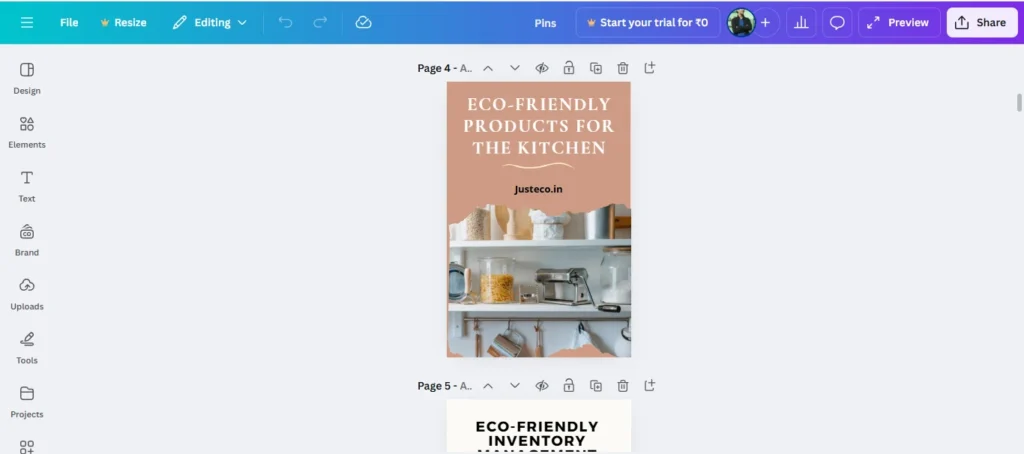
When I started pinning eco-lifestyle content, I noticed my traffic doubled within two months — all without paid ads.
Pinterest works especially well for visual, solution-based topics like sustainable living, DIY, or eco-product tips.
3. Learn Basic SEO (After You Have a Few Posts)
I always tell beginners: Don’t let SEO scare you — but don’t ignore it forever either.
After you’ve written 5–6 posts and built some confidence, start exploring the basics of Search Engine Optimization (SEO).
SEO helps Google understand your blog so it can show your posts to people searching for topics you write about.
Here’s how to start:
- Install Rank Math SEO Plugin – it guides you step-by-step inside WordPress.
- Optimize your title and meta description – use phrases people might search (like “eco-friendly home tips”).
- Use proper headings (H2, H3) – Google loves structured content.
- Add internal links – link related posts to each other (e.g., from “eco blog setup” to “green hosting guide”).
- Add alt text to images – describe what the image shows in simple words.
👉 Start your eco-friendly blog with Hostinger today →
4. Engage With Other Bloggers and Communities
Networking is underrated in blogging.
The eco niche especially is filled with supportive creators who love collaboration.
Start by:
- Commenting on other eco blogs (genuinely, not with “nice post” messages).
- Joining sustainability-related Facebook or Reddit groups.
- Sharing others’ content with credit — it helps you build goodwill.
- Reaching out for small collaborations like guest posts or interviews.
That’s how I made my first blogger friends — and those connections later helped me get backlinks, shares, and even paid partnerships.
When you connect authentically, your name starts popping up in the community — and that builds trust faster than any algorithm can.
5. Build an Email List Early
Even if you get 100 readers a month, start collecting emails from day one.
Your email list is your most valuable asset — it’s traffic you control.
You can use free tools like MailerLite or ConvertKit (free plan) to create a simple form on your blog.
Offer something small to encourage sign-ups:
- A free checklist (e.g., “10 Eco Swaps You Can Start Today”)
- A 7-day eco challenge
- An eBook with your favorite green living tips
Send a friendly email once a week sharing:
- Your latest blog post
- A sustainability tip
- A short personal story
You’ll be surprised how many loyal readers come from that small, consistent effort.
6. Use Quora and Medium to Build Authority
Quora and Medium are underrated platforms for new bloggers.
On Quora, you can answer questions related to eco-friendly living and include your blog link when relevant.
Example: Someone asks, “How can I make my home more eco-friendly?”
You write a detailed answer and link to your article: “Here’s my guide on sustainable home tips.”
On Medium, you can republish your blog posts to reach new audiences (use their “import” tool so Google knows it’s syndicated).
This not only brings traffic but also builds your credibility as an expert in the sustainability niche.
7. Be Consistent (Even When It Feels Like No One Is Watching)
The hardest part of promotion isn’t the technical stuff — it’s staying consistent when you feel invisible.
Your first month might bring only 20 visitors.
Your second month, maybe 100.
But those 100 are real people who chose to read your words — and that’s something incredible.
When I hit my first 1,000 monthly visitors, it felt like a miracle. But it happened only because I kept posting, sharing, and learning a little each week.
Consistency compounds.
Every blog post you share is a digital seed — it might take time to grow, but it always adds to your garden.
8. Create a Routine That Works for You
Here’s what a simple weekly promotion routine might look like:
- Monday: Write your blog post
- Tuesday: Create and post 2–3 Pinterest pins
- Wednesday: Share your post on LinkedIn or Instagram
- Thursday: Comment on 3 blogs or join a community discussion
- Friday: Send your weekly email to subscribers
You don’t need to do everything every day — just pick what works for you and stick to it.
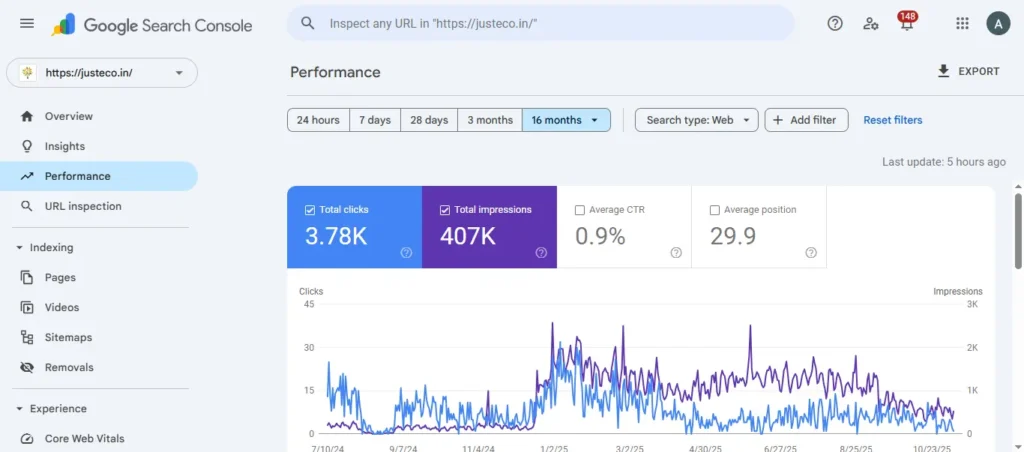
9. Track What’s Working (and What’s Not)
After a month or two, install Google Analytics (GA4).
Check where your traffic is coming from — Pinterest, Google, Instagram, etc.
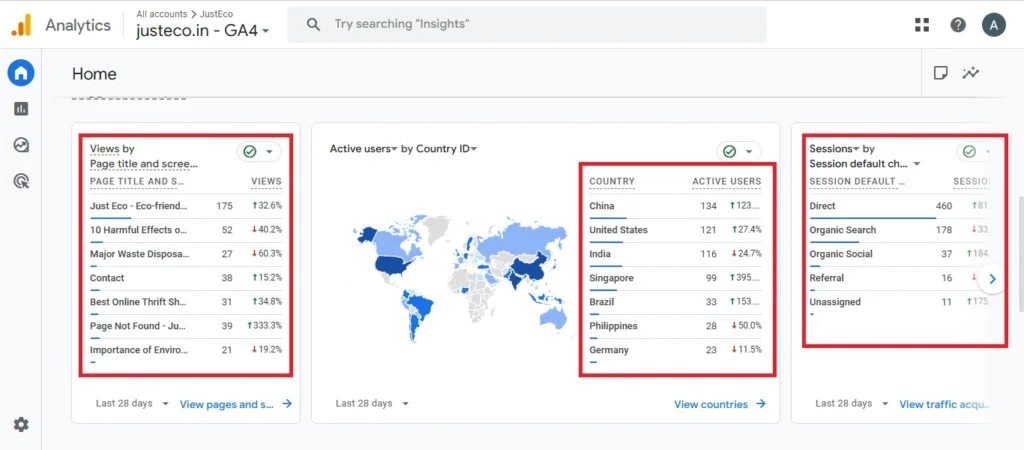
Focus more on what’s bringing results and less on what’s not.
For example, if Pinterest drives most of your traffic, double down on that. If your posts perform well on LinkedIn, write more there.
This way, you promote smarter, not harder.
Promoting your eco blog is really about building relationships — with your readers, your fellow bloggers, and your own goals.
The more people see your genuine effort and values, the faster your audience will grow — and the more trust you’ll build when you eventually start monetizing.
Step 6: How to Make Money from Your Eco Blog (Ethically)
Let’s get one thing straight before we dive into numbers —
You absolutely can make money from your eco-friendly blog without compromising your values.
The sustainability niche isn’t just about awareness — it’s also a growing global market filled with brands, tools, and readers who care deeply about responsible choices.
But here’s the difference between a typical blogger and an eco blogger: Our goal isn’t to sell — it’s to serve first and earn by genuinely helping others make better choices.
When I started monetizing Justeco.in, I tried many things — some worked beautifully, others flopped.
Through trial and error, I found that ethical monetization comes down to one principle:
“Only promote what you’d personally use and proudly recommend.”
Let’s go through the most effective and sustainable income streams for eco bloggers, step by step.
1. Affiliate Marketing (My #1 Recommendation)
Affiliate marketing is one of the easiest and most beginner-friendly ways to earn from your blog.
It means promoting a product or service you trust — and earning a small commission when someone buys through your unique link.
For example, I personally use Hostinger to run my blog. So, when I recommend it to beginners who want to start their eco blogs, I include my affiliate link. If they buy hosting through that link, I earn a commission — at no extra cost to them.
This method is beautiful because it rewards helpful content.
You’re not selling — you’re guiding your readers toward something useful.
How to Start Affiliate Marketing on Your Eco Blog
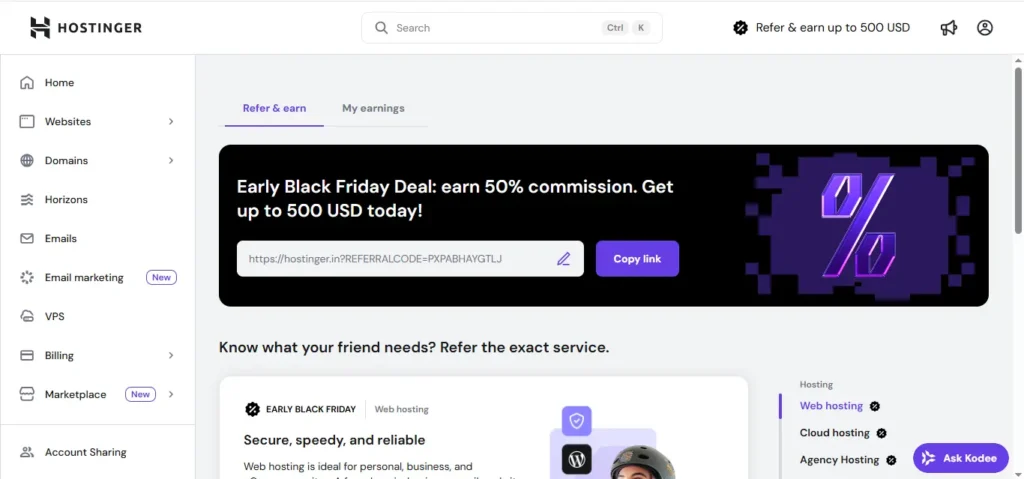
- Sign up for affiliate programs
Start with a few trusted platforms like:- Hostinger Affiliate Program (for web hosting)
- Impact, or Awin (for eco-product brands)
- Amazon Associates (for smaller eco gadgets and home items)
- Create helpful content that naturally fits your affiliate links
Examples:- “Best Eco-Friendly Hosting for Bloggers” → Promote Hostinger
- “10 Sustainable Kitchen Swaps That Actually Work” → Promote eco brands
- “My Blogging Toolkit for Eco Creators” → Link to tools like Canva or Rank Math
- Be transparent
Always disclose that your post contains affiliate links.
This builds trust — and trust is what makes readers buy through you, not someone else.
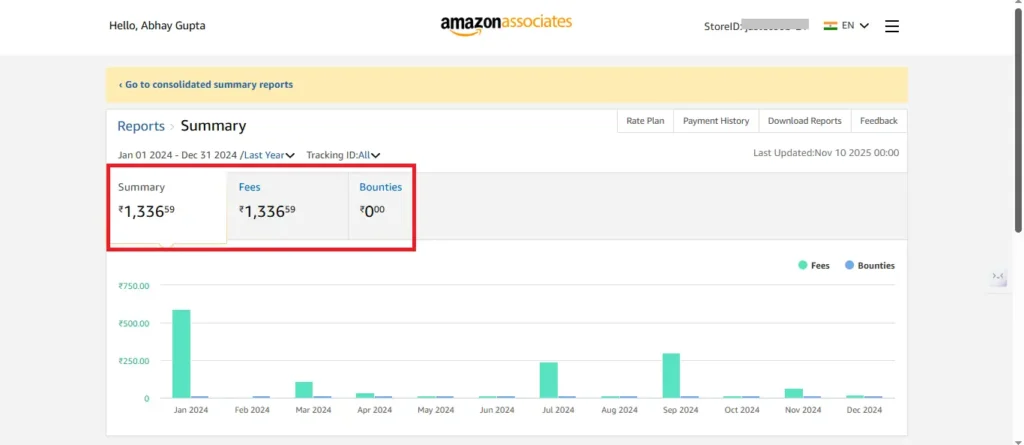
Personal insight:
Affiliate marketing became my main source of blogging income — but only after I focused on building valuable posts and honest reviews.
If you write content that solves real problems, your readers will happily support you by using your affiliate links.
2. Sponsored Posts and Brand Partnerships
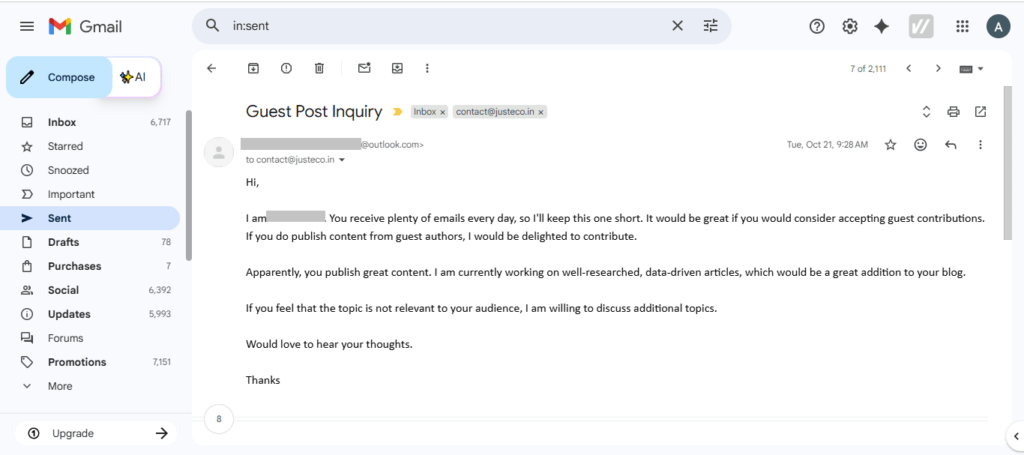
Once your blog grows and gets consistent traffic, brands may start approaching you for collaborations.
These are sponsored posts — where a company pays you to review or feature their eco-friendly products or services.
But here’s the catch:
Don’t accept every offer that comes your way.
Your audience trusts your recommendations — so work only with brands that align with your sustainability values.
Example from My Experience:
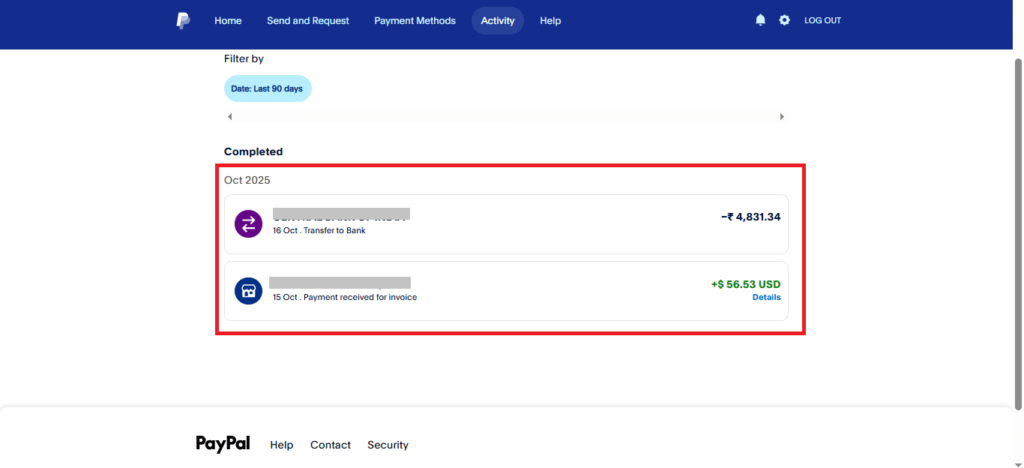
I once collaborated with a small eco bag brand at a local exhibition. Instead of just promoting their product, I wrote a post about “How to Choose Sustainable Bags That Last” — and naturally included their product in the list.
That approach made the article both authentic and valuable, and it performed well because it genuinely helped readers decide what to buy.
How to Find Ethical Brand Partnerships
- Create a “Work With Me” or “Write for Us” page on your blog
- List your blog stats, audience type, and past collaborations
- Reach out to eco brands through Instagram or email
- Be upfront about your values — “I only promote sustainable, tested, and verified products.”
You might start with small collaborations (₹1,000–₹5,000 per post) and scale up as your blog traffic grows.
👉 Start your eco-friendly blog with Hostinger today →
3. Sell Digital Products (Your Knowledge = Income)
This is where your eco blog can truly become a digital business.
Once you’ve built an audience, you can create your own digital products to help them further.
This could be:
- Eco checklists or planners
- Printable sustainability journals
- Mini eBooks like “30 Days to a Greener Home”
- Courses or workshops (once you gain expertise)
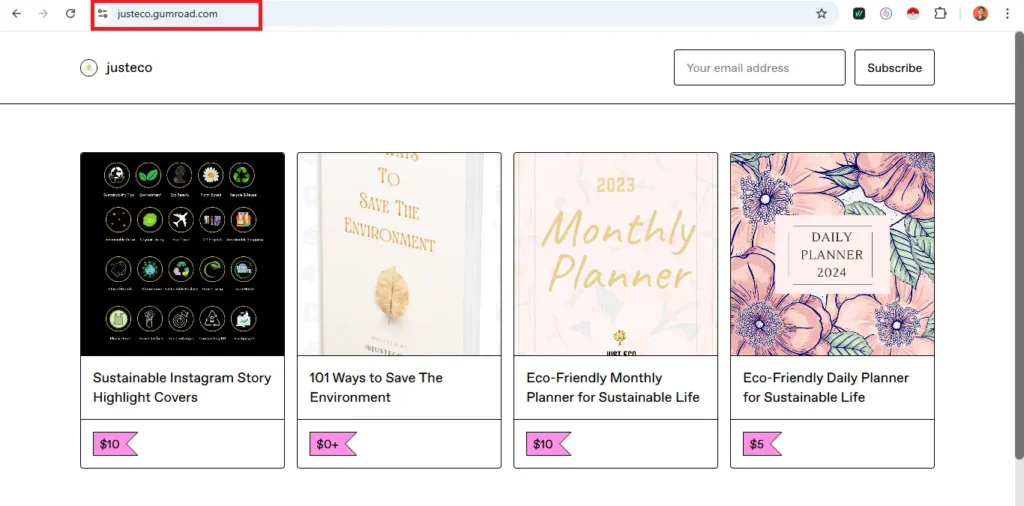
You can design these products using Canva and sell them through:
- Gumroad (simple and free to start)
- Etsy
- Your own WordPress store (using WooCommerce)
What’s beautiful about digital products is that you create them once — and they can earn you passive income for years.
Start small. Create one freebie (like a downloadable eco checklist) to attract email subscribers.
Later, turn it into a paid version with more value — for example, a complete “Eco Lifestyle Planner.”
4. Display Ads (Google AdSense or Ezoic)
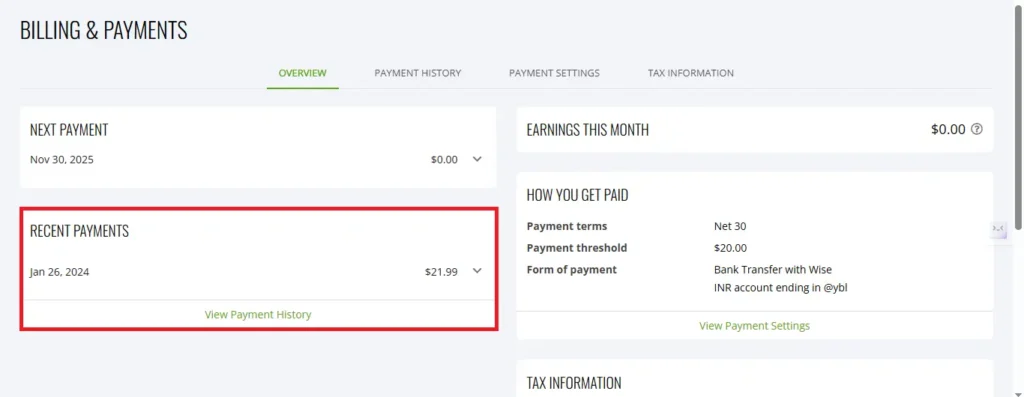
Once your blog starts getting traffic (say 5,000+ monthly visitors), you can enable display ads.
These are small banner ads that appear on your site and generate income each time someone views or clicks them.
Start with Google AdSense — it’s easy to set up and beginner-friendly.
As you grow, switch to better-paying networks like Ezoic or Mediavine (once you cross 50,000 sessions).
But — use ads carefully.
Too many ads can slow your website and annoy readers, which goes against your eco-friendly, minimalist brand.
I recommend placing them subtly — maybe one in the sidebar and one between paragraphs.
5. Offer Services or Coaching
As your expertise grows, you can also monetize your skills through your blog.
For example, if you learn SEO or digital marketing (like you already have), you can offer:
- Sustainability content writing
- Eco brand marketing consulting
- Blog setup services for beginners
Or, if your readers see you as an authority in green living, you could even start eco-lifestyle coaching sessions.
It’s one of the fastest ways to earn — because you’re offering your time and knowledge directly.
💡 Example:
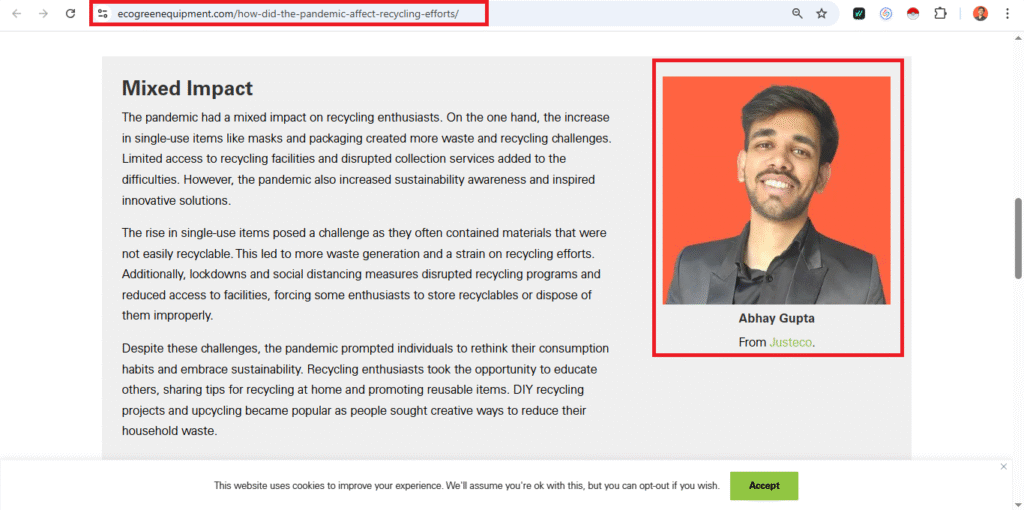
After I gained traction with Justeco.in, I got messages from small eco businesses asking me how to grow their websites That turned into consulting opportunities — which paid better than ads or affiliates early on.
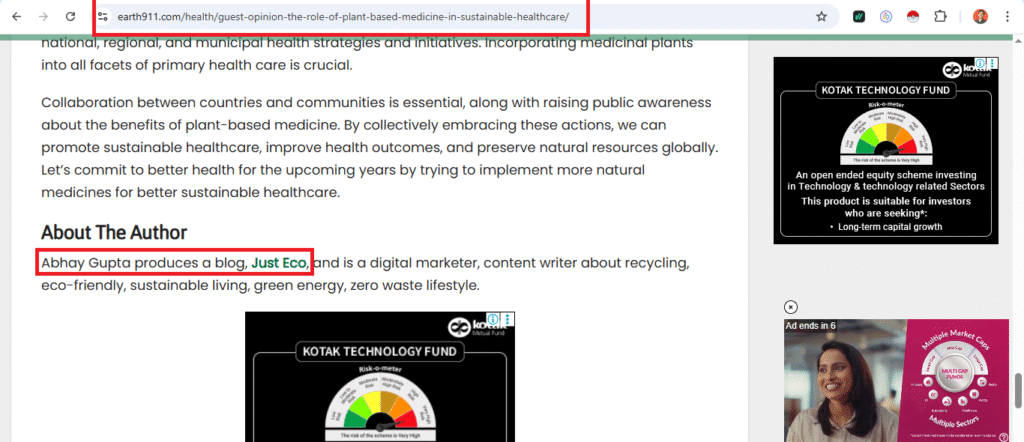
Also big websites approch you to write content for them.
6. Build a “Resources” Page
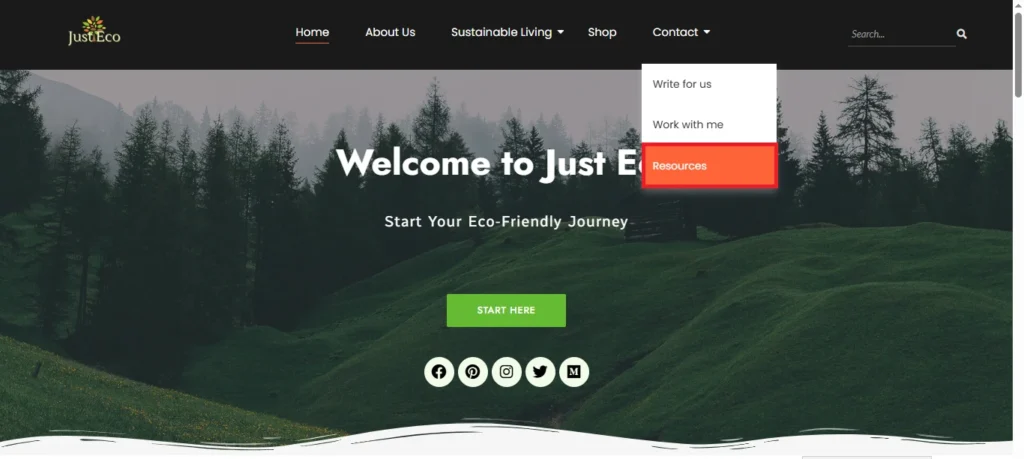
If you want to increase your affiliate conversions and help readers simultaneously, create a dedicated Resources page.
Think of it as your blog’s recommendation hub — a place where readers find all the tools and brands you personally use.
Example sections:
- Blogging Tools: Hostinger, Canva, Rank Math, Grammarly
- Eco Products I Recommend: Reusable bottles, bamboo cutlery, sustainable fashion
- Courses I Trust: SEO or digital sustainability guides
Each item should include a short review, why you love it, and your affiliate link.
Readers often bookmark this page — it’s one of the highest-converting areas on a blog.
7. Combine Multiple Income Streams
You don’t have to rely on just one method.
The smartest bloggers diversify — combining 2–3 income streams strategically.
👉 Start your eco-friendly blog with Hostinger today →
Here’s an example of how your eco blog can make money after 6–12 months:
| Source | Example | Potential Monthly Income |
|---|---|---|
| Affiliate Marketing | Hostinger, eco brands | ₹15,000–₹40,000 |
| Sponsored Posts | Product reviews, collaborations | ₹10,000–₹30,000 |
| Digital Products | Checklists, eBooks | ₹5,000–₹20,000 |
| Ads | Google AdSense | ₹3,000–₹10,000 (Depends on Traffic) |
| Consulting | SEO, sustainability advice | ₹10,000+ |
These numbers will grow as your audience grows — and the best part? You’ll be earning from content that helps others live more sustainably.
8. Be Patient and Stay Ethical
Monetization doesn’t happen overnight. It takes months of building content, consistency, and trust.
There will be weeks when you earn nothing — and then one day, a single affiliate sale or brand deal will remind you why it’s worth it.
I still remember the day I made my first ₹500 affiliate sale — it felt small, but it meant my blog had real value.
So don’t chase money blindly. Focus on your readers, and income will follow naturally.
“When you help enough people solve their problems, income becomes a byproduct — not the main goal.”
Step 7: Stay Consistent and Keep Learning
Your first month might feel slow.
You’ll write a lot, and it might seem like no one’s reading.
But consistency beats everything.
I still remember the first comment I got — it was from someone in Delhi who said,
“Your post on zero-waste living helped me reduce my kitchen waste by 40%.”
That comment reminded me why I started.
So, keep writing, keep learning SEO, and keep experimenting.
Blogging for the Planet (and Yourself)
Let’s face it — the internet is full of noise.
But when you start an eco-friendly blog, you’re creating meaningful content that inspires change.
You’re teaching people how to live consciously, reduce waste, and make better choices — and that’s priceless.
So don’t overthink. Don’t wait for perfection.
Your voice matters — and your blog could be someone’s first step toward living sustainably.
Final Thoughts — Your First Step Starts Today
If you’ve read this far, you already care about creating something impactful.
Now it’s time to take action.
Here’s what I’d do if I were starting today:
- Choose your niche.
- Get reliable hosting & Domain from Hostinger (what I personally use) – Use my REFERRAL CODE “PXPABHAYGTLJ” to get 20% Instant Discount
- Set up WordPress and write your first post this weekend.
Every successful blogger starts with one small post.
Yours could change how someone thinks about the planet — and it could change your life too.
👉 Start your eco-friendly blog with Hostinger today →
Over to You
What niche are you planning to start your eco blog in?
Drop it in the comments below — I’d love to hear from you!